"Based on a true story" is the most abused phrase in horror marketing, and also the most effective. Here are five films where there really was a case, a family or a court record behind the story, what actually happened, and how far each film strayed from it.
Horror has been claiming true stories for as long as it has been selling tickets, because nothing else makes an audience check the locks on the way home. Some of those claims are solid, some are a single real detail wrapped in invention, and one of the most famous is widely regarded as a hoax.
The rule for this list: there has to be a documented real event the film is built on, not just a line in the trailer. Each entry says what the event was, and then says plainly where the film leaves it behind. They are ranked by how well the film works, not by how true it is, and the two do not line up.
The true part is rarely the scary part. The scary part is what the film makes you believe the true part implies.
5The Amityville Horror
The most famous haunted house in America, and the most disputed.
What really happened: in November 1974, Ronald DeFeo Jr. shot and killed six members of his family at 112 Ocean Avenue in Amityville, New York. About a year later George and Kathy Lutz bought the house cheaply and moved in with their children. They left after 28 days, describing flies, voices, slime and a presence in the house, and their account became Jay Anson's 1977 bestseller.
The murders are fact. The haunting is the most contested story on this list: DeFeo's defence lawyer later said he and the Lutzes had invented much of it together, and later owners of the house reported nothing at all. The film, with James Brolin and Margot Kidder, takes the book entirely at its word.
It is here, at five, because it is the film that proved what a true-story label could do: on TMDB's figures it turned a budget of about $4.7 million into more than $86 million. It is slower and more dated than anything else on this list, and it is still the reference point every haunted-house film since has been measured against.
What really happened: writer and director Bryan Bertino has said the film grew from a childhood memory. Strangers knocked at his family's door asking for someone who did not live there, and he later learned people had been breaking into empty homes in the area that night. He has also named the Manson family murders as an influence.
That is the whole true story: a knock, a wrong name, and the realisation of what might have happened. There were no masked killers in Bertino's childhood. The film, with Liv Tyler and Scott Speedman as a couple alone in a remote holiday home, opens by calling itself "inspired by true events", which is technically accurate and deliberately misleading.
It is still one of the most frightening home-invasion films ever made, precisely because it refuses to explain anything. Eighty-six minutes, three masks, and the line "Because you were home" as the only motive anyone is ever given.
3The Exorcism of Emily Rose
A horror film that is really a courtroom drama about a real death.
What really happened: Anneliese Michel, a young woman in Bavaria, underwent dozens of exorcism rites in 1975 and 1976 after years of epileptic seizures and psychiatric symptoms. She died in July 1976, severely malnourished. In 1978 her parents and the two priests who performed the rites were convicted of negligent homicide.
Director Scott Derrickson moves the story to America and builds it around the trial of the priest, played by Tom Wilkinson, defended by Laura Linney. Jennifer Carpenter plays Emily in flashback, and her contortions are done without effects.
It is the only film here that takes the other explanation seriously. The prosecution argues epilepsy and psychosis, the defence argues possession, and the film lets both stand. That makes it more honest to its source than anything else on this list, and it is rated PG-13, so it is also the easiest one to watch with a teenager.
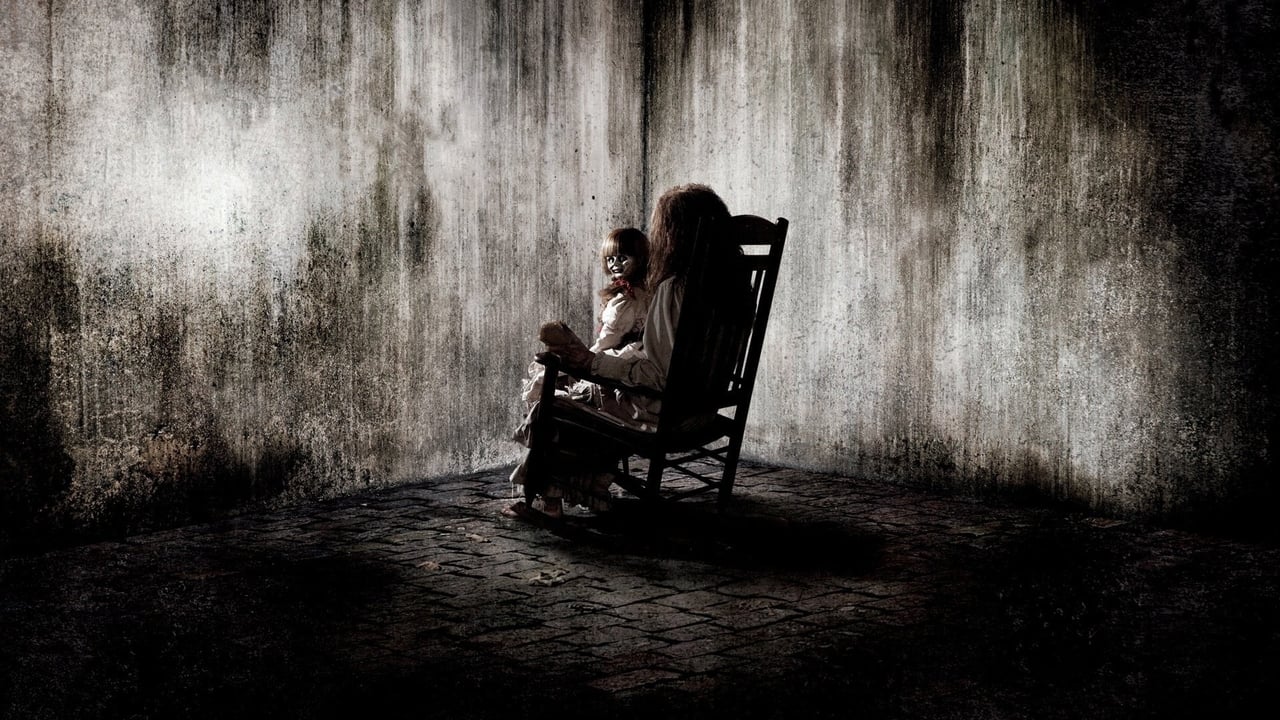
What really happened: in 1971 Roger and Carolyn Perron moved their five daughters into an old farmhouse in Harrisville, Rhode Island, and the family has said for decades that it was haunted. Ed and Lorraine Warren, the paranormal investigators, did visit. The eldest daughter, Andrea Perron, later wrote a three-volume account of the family's years there.
How much of the rest happened is exactly as unprovable as you would expect. The family's own accounts describe years of disturbances; the film compresses them into weeks and ends on an exorcism, which is where it leaves the record furthest behind. James Wan directs, with Vera Farmiga and Patrick Wilson as the Warrens and Lili Taylor as Carolyn.
As a film it is close to perfect studio horror: on TMDB's figures a $13 million budget returned more than $320 million, and it launched a whole universe. The doll in the opening, Annabelle, is also based on a real object the Warrens kept, and got her own entry in our doll horror ranking.
What really happened: in 1949 a teenage boy, later given the pseudonym Roland Doe, underwent a series of exorcisms in Maryland and St. Louis. The Washington Post reported it that summer. William Peter Blatty, then a student at Georgetown, read the story and more than twenty years later turned it into his 1971 novel.
Blatty changed almost everything: the boy became a twelve-year-old girl, Maryland became Georgetown, and the priests became Father Karras and Father Merrin. What he kept was the premise that the Church had taken a case like this seriously. William Friedkin directed, with Ellen Burstyn, Linda Blair and Max von Sydow.
It is number one because it is the best film here by some distance and because it uses its true story the right way. It does not claim to be a record of what happened. It asks what it would mean if something like it had, and fifty years later it has never been bettered at that.
Psycho and The Texas Chain Saw Massacre both borrow from the Wisconsin killer Ed Gein, and both are left out because the borrowing is a detail rather than a story: neither film is about what he did. Leatherface does make our list of the scariest horror villains, on his own merits. The Conjuring 2 is based on the Enfield poltergeist case in London, and missed the cut only because one Conjuring was enough.