Four of the most famous masks in horror were accidents: a Star Trek toy, a lighting test, a novelty mask found in an empty house, and a face that was never a mask at all. Here are the five worth owning, ranked by how well each one reads across a dark room, with the film that made it and a link to buy it.
A horror mask has one job, and it is a graphic-design job rather than a special-effects one. It has to be readable at twenty feet, in bad light, on a person you cannot see the rest of. That is a brutally narrow brief, and it explains why the masks that lasted are the plainest ones on this list rather than the most detailed.
It also explains something odd about the industry that grew up around them. The best-selling horror masks are not always screen replicas, because two of the five faces below were never masks in the films at all. They were makeup. The latex version you can buy is a reproduction of a prosthetic, which is a strange and slightly wonderful thing for a costume shop to be selling.
How this list is ranked
The rule is recognisability, not scariness and not box office. A mask earns a place here if a stranger can name the character from a silhouette, and if you can actually buy a decent version of it rather than a vague legally-distinct approximation. That rule is what puts a 1978 Star Trek toy at number one and leaves several genuinely better-designed masks off the list entirely.
Where a film's own version was makeup rather than a mask, it is said so in the entry. That is not a disqualification, but it is why those two rank fourth and fifth.
A quick note on the links
The Amazon links below are affiliate links. If you buy through one, we earn a small commission at no extra cost to you, and it costs you nothing if you would rather search Amazon yourself. Nothing was paid for placement: the ranking is the ranking, and it would read the same with the links stripped out. Prices and availability on Amazon change constantly, so none are quoted here.
5Art the Clown
The newest face here, and the only one that is still growing.
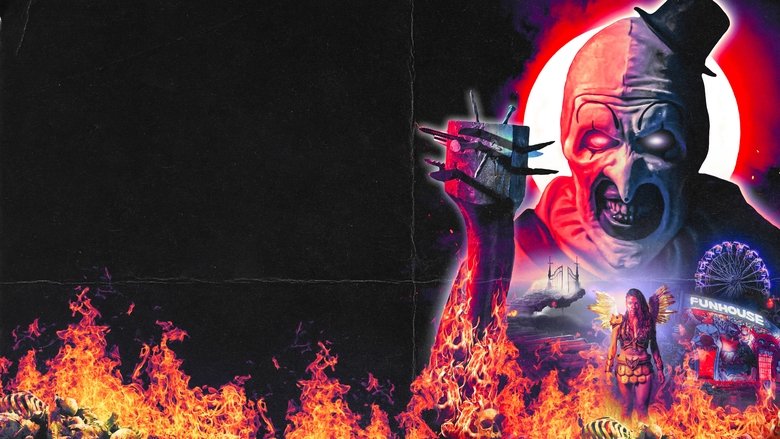
Art is the only character on this list who was not designed by a studio. Damien Leone built him for a short film, The 9th Circle, which was shot on 35mm in 2006 and premiered at a festival two years later. He turned up again in a 2011 short, then in the anthology All Hallows' Eve in 2013 with Mike Giannelli in the makeup, and only became the character people now recognise when David Howard Thornton took over for the first Terrifier feature.
The design is the least fussy thing in modern horror: black and white, no colour anywhere, a tiny hat, and a grin drawn on rather than sculpted. It works for exactly the reason Michael Myers works. There is almost nothing on it, so your eye reads the shape instead of the detail, and the shape is a smile.
Here is the part worth knowing before you buy: on screen it is not a mask. Thornton sits for a custom prosthetic that has to be sculpted fresh every single shooting day, because it is destroyed coming off. Reports of how long it takes range from about two and a half hours on a good day to four, depending on which film and whose account you read. What you can buy is a latex interpretation of that, and the good ones are surprisingly close.
The economics are the real story. The first Terrifier was made for about $35,000. Terrifier 2 cost roughly $250,000 and took around $15.8 million. Terrifier 3 cost about $2 million and took over $90 million. That is the fastest a horror character has gone from nothing to a shelf at every costume shop in a long time, and it is why Art is the one to watch. He is also number one on our ranking of the best clown horror movies, where the competition is stiffer than you would think.
Buy it: Art the Clown mask on Amazon. Judge any Art mask on the mouth before anything else. The grin is the entire character, and it is the first thing a bad sculpt gets wrong.
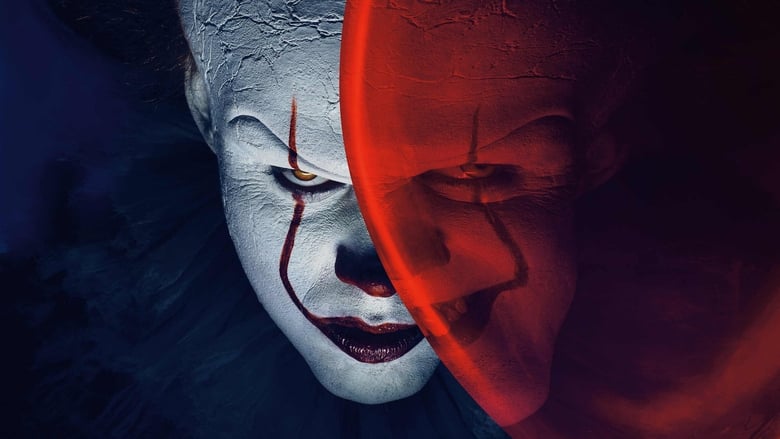
Pennywise is the opposite of every other pick here. The others are blank. This one is loaded: the domed forehead, the red seams running up from the mouth, the ruff, the ochre and the rust. Andy Muschietti's 2017 film turned a $35 million budget into nearly $720 million partly on the strength of that design being instantly, endlessly screenshot-able.
Like Art, though, Bill Skarsgård is not wearing a mask in the film. It is prosthetics and paint, which is what lets the face do the thing that actually frightens people: the eyes drift apart independently and the smile arrives before the rest of the expression does. No latex mask can reproduce that, so judge a Pennywise mask on the sculpt and the paint job rather than on how screen-accurate it claims to be.
Two practical warnings. It is the least breathable option on this list, because the design covers more of your head than any of the others. And it is the only one here that really wants the rest of the costume: the mask alone reads as a generic scary clown, while the mask plus the ruff reads as Pennywise from across a car park.
Buy it: Pennywise mask on Amazon. Officially licensed versions run from plain moulded masks up to detailed latex, and the gap between the tiers is wider here than for any other character on this list.
The entry title above is Part III rather than the 1980 original, and that is deliberate: Jason does not wear the hockey mask until the third film. In the first he is barely present at all, and in the second he wears a burlap sack. The most recognisable object in slasher history arrived two films late.
It arrived by accident, too. Martin Jay Sadoff, the 3D effects supervisor on Part III, was a hockey fan and had gear with him. A lighting test needed Jason on his mark and nobody wanted to sit through a makeup application for it, so a Detroit Red Wings goaltender mask went on Richard Brooker's face instead. Director Steve Miner saw the footage and kept it.
As a piece of design it is the best pure silhouette on this list. Three triangles and a set of holes, and it reads correctly at any distance and at any angle, which is more than the white Myers mask manages in profile. It is also the most comfortable mask here by a wide margin, because it is the only one that was engineered to be worn for two hours by someone doing physical work.
One tip if you are buying for accuracy rather than for a party: the mask changes from film to film. The chevrons move, the wear and the axe damage accumulate, and replica sellers usually name the film a given sculpt is based on. Pick a film first. If you want the definitive one, Part III (1982) is where the object was born.
Ghostface has the strangest origin of the five, because it was already a product before it was a character. The mask was made by the New York novelty company Fun World, designed by Brigitte Sleiertin, and sold from 1991 as part of a line called Fantastic Faces. It was a Halloween mask with no film attached to it and no reason anyone would remember it.
Producer Marianne Maddalena found one inside a house the production was scouting as a location, the building that ended up being the Riley home in the finished film. Wes Craven wanted it. The licensing did not come together immediately, so the team designed alternative masks loosely based on it as a fallback, and a deal with Fun World was reached in time to use the real thing.
It is the best-designed mask on this list, and it is not close. The elongated teardrop shape, the black shroud that hides the whole head, and the fact that the expression is fixed in a scream rather than a grin all do work. It is also the only one that does not need you to be a particular size, which is a large part of why it has out-sold everything else in the category for thirty years.
There is no single performer to credit, which is the point of the character. The costume is worn by different killers in every film, and the one constant across the franchise is Roger L. Jackson, who has voiced the phone calls since 1996. Craven's original cost $14 million and took $173 million, and the franchise has not stopped since.
Buy it: Ghostface mask on Amazon. This is the cheapest entry here and the one where cheap is fine. Check that the shroud is included and long enough, since that is where the budget versions cut corners.
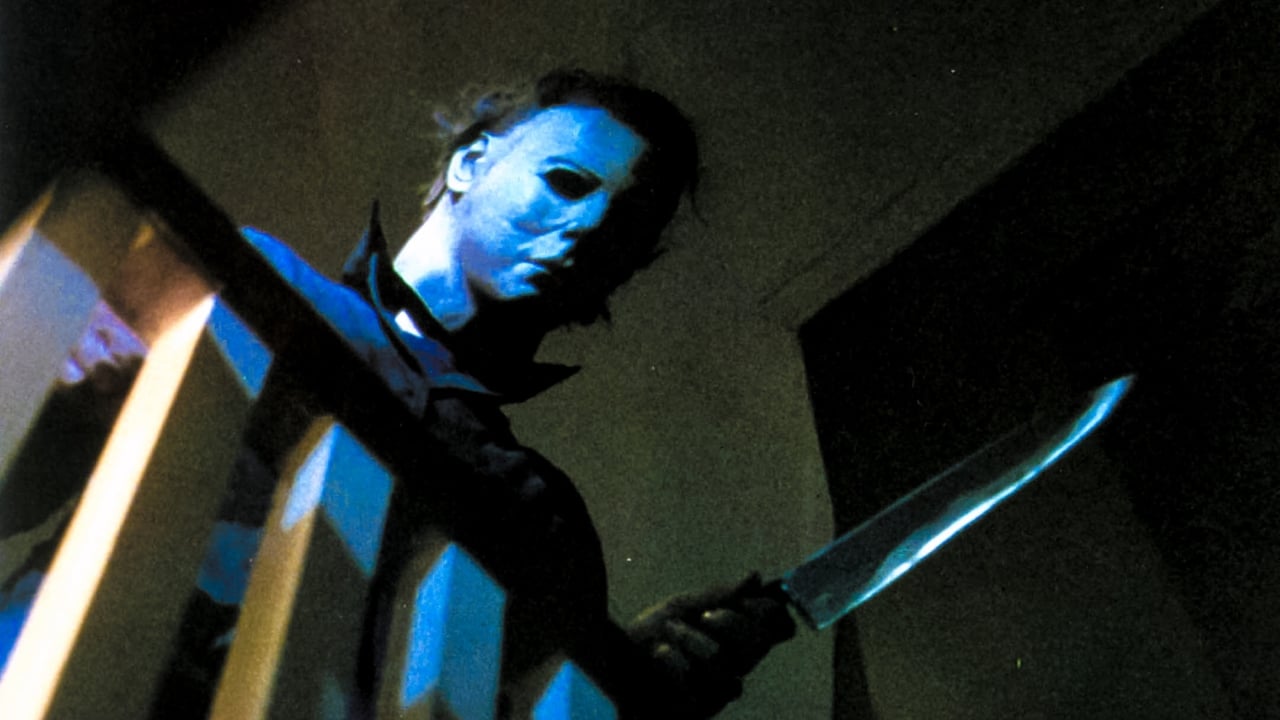
Halloween was made for about $325,000 and took over $70 million, and the most valuable object in it cost less than two dollars. Production designer Tommy Lee Wallace could not afford a custom sculpt, so he went to a magic shop on Hollywood Boulevard and came back with a Captain Kirk mask: a $1.98 novelty of William Shatner's face.
What he did to it is the whole trick. He widened the eye holes with scissors, took off the sideburns, teased up the hair and sprayed the flesh-coloured rubber a bluish white. John Carpenter's own description of why it beat the other option on the table, an Emmett Kelly clown, is the best short explanation of mask design anyone has given: the Kirk face had a disturbing neutrality, something that unsettles you without your being able to say what.
That neutrality is why it is first. Ghostface is screaming at you and Art is grinning at you, so both of them tell you something. The Myers mask tells you nothing at all, and your brain fills the blank in with whatever it has got. Carpenter shoots the 1978 film to exploit exactly that: Michael stands still, in daylight, at the edge of a widescreen frame, and half the audience notices him a second before the other half.
Buy it: Michael Myers mask on Amazon, and the coveralls to go with it. This is the one worth spending on. The mask is so plain that every flaw in a cheap sculpt is visible, and the licensed replicas are modelled from specific films, so you can pick a year. The costume matters more here than for anyone else on the list, because a white mask on ordinary clothes is just a white mask.
The ranking above is about the masks as objects. The buying order is slightly different, because what you actually want out of a costume is for people to know who you are without asking:
Michael Myers: the safest buy. Recognised by everyone, cheap to complete with coveralls, and it works on any face shape.
Ghostface: the cheapest and the most comfortable, and the only one that fits over glasses without a fight.
Jason Voorhees: the best choice if you will be wearing it all night. It is a sports mask, so it breathes.
Art the Clown: the one with momentum. Fewer people had it last year than will have it this year.
Pennywise: the most impressive and the most work. Budget for the ruff, and accept that you will be hot.
The two masks at the top of this list are a Star Trek toy and a mask that was already sitting on a shelf in a shop. Neither was designed for the film it made famous, and that is not a coincidence: a mask built to be scary is trying too hard to be blank.
Two that nearly made it
The Grabber from The Black Phone is the best new horror mask design of the last decade, and it is the only one here that is genuinely modular: it comes apart into a top half and a bottom half, and Ethan Hawke plays whole scenes in a different configuration of it. It missed the cut on recognisability alone, which is a matter of time rather than quality. The Grabber mask on Amazon.
Valak, the demon nun from The Nun, has the strongest single feature of any face in modern horror in those eyes, and the film out-grossed several entries on this list at $366 million. It loses out because the habit is doing most of the work: without the full costume the mask reads as a generic ghoul. If you are committing to the whole outfit, though, it is devastating. Nun mask on Amazon.
Freddy Krueger is the obvious absence, and he is absent for a technical reason rather than a snobbish one: Freddy has no mask. That is makeup on a face, and it is the one look here where the cheap latex version is nothing like the thing it copies. He still tops our ranking of the scariest horror movie villains, where being unmasked is precisely the point.