Every one of these five films started as a book somebody said could not be filmed, or should not be. Here they are ranked by how well each one turned pages into pictures, what each had to cut or change to get there, and a link to the book if you want the version with everything left in.
Adapting a novel is mostly an exercise in deciding what to throw away. A 400-page book holds far more than a two-hour film can, and the films that work are the ones that knew which parts mattered. The five below made very different calls: one split a single novel across three films, one split a novel in half, one put scenes on screen that the book never shows you, and one turned a cruel boss into one of the best-loved roles of Meryl Streep's career.
Three of the five also have something new coming within the next two months, which makes this a good season to read the book first. If you would rather stay on the couch, the same rundown for television is in our list of the best TV shows based on books.
How this list is ranked
Not by box office, and not by how faithful each film is, because the most faithful adaptation is rarely the best one. The question is how well the film carries what makes the book worth reading, and how much it did for the book in return. A film that sent millions of people to a novel they would never have opened scores well. A film that kept every scene and lost the point does not.
A quick note on the links
The Amazon book links below are affiliate links. If you buy through one, we earn a small commission at no extra cost to you. Nothing was paid for placement, and the ranking would read the same with the links stripped out. Prices and editions on Amazon change constantly, so none are quoted here.
5The Devil Wears Prada
The rare film that is kinder to its villain than the book was, and better for it.
Lauren Weisberger's 2003 novel came out of her time as an assistant at Vogue, and it was read everywhere as a portrait of Anna Wintour, a reading Weisberger has always played down. On the page Miranda Priestly is a monster seen entirely from below: Andy's resentment is the lens, and Miranda rarely gets a moment that is not about making her assistant's life worse.
David Frankel's film, from a screenplay by Aline Brosh McKenna, keeps the plot and changes the temperature. Meryl Streep plays Miranda almost without raising her voice, and the film gives her the cerulean sweater speech, which turns her from a tyrant into someone who is right about something. That single scene is the reason the movie outlived the book in the culture. Streep was nominated for an Oscar for it, Emily Blunt and Stanley Tucci walked off with every other scene, and Anne Hathaway holds the whole thing together as the only person in the building who does not know the rules.
It was made for about $35 million and TMDB puts its worldwide total at roughly $327 million. The 2026 sequel did better still: The Devil Wears Prada 2 opened to about $77 million in the US and Canada on the first weekend of May, nearly three times the original's $27.5 million debut, and around $233 million worldwide.
Suzanne Collins wrote The Hunger Games (2008) in the first person and the present tense. You only ever know what Katniss knows, which is the source of the book's dread: she cannot see the people controlling the arena, so neither can you. That is close to impossible to film, because a camera has no inner monologue.
Gary Ross's adaptation, which Collins co-wrote with Ross and Billy Ray, solved it by leaving Katniss. It cuts away to the Gamemakers' control room, where Seneca Crane is literally steering the arena, and to President Snow, who barely appears in the first book. What the reader had to infer, the viewer gets to watch being built. It is a bigger change than it looks, and it is why the film works as a thriller rather than as a long stretch of a girl alone in the woods. Jennifer Lawrence does the rest.
It cost about $75 million and TMDB has it at around $694 million worldwide. Four films followed the trilogy through 2015, the prequel The Ballad of Songbirds & Snakes arrived in 2023, and the next one is close: The Hunger Games: Sunrise on the Reaping, from Collins's 2025 novel about Haymitch's own Games, opens November 20, 2026, with Joseph Zada as the young Haymitch.
Frank Herbert's Dune (1965) spent decades with a reputation as the science fiction novel nobody could adapt. Alejandro Jodorowsky's attempt in the 1970s collapsed before shooting, and David Lynch's 1984 film tried to fit the whole book into one movie and is mostly remembered for how much it had to explain in voice-over.
Denis Villeneuve's fix was simple and expensive: don't fit it. His 2021 film covers roughly the first half of the novel and stops, and Dune: Part Two (2024) finishes it. That room is what lets the film do the thing the book does best, which is make Arrakis feel enormous and Paul feel small inside it. The screenplay, by Villeneuve, Jon Spaihts and Eric Roth, keeps Herbert's politics and drops most of the internal monologue the book runs on, trusting Timothée Chalamet's face and Hans Zimmer's score to carry it. The first film won six Oscars.
It is also the one film on this list still being made. Dune: Part Three, adapting Herbert's 1969 sequel Dune Messiah, is due in theaters in December 2026. Messiah is a short, sour book that takes apart everything the first one built, so it is well worth reading before it arrives.
J.K. Rowling's first book came out in Britain in 1997 and in the US the next year, renamed Harry Potter and the Sorcerer's Stone, which is also the title the film carried in American theaters. Chris Columbus directed it from a Steve Kloves screenplay, and the brief was plain: put the book on screen. Very little is cut, the casting is British almost to a person, and three largely unknown children (Daniel Radcliffe, Rupert Grint and Emma Watson) were asked to grow up on camera across eight films.
That faithfulness is the film's strength and its limit. It is warm, it looks exactly the way a generation of readers imagined it, and it is a bit stiff, because a children's book about discovering a world spends a lot of time explaining that world. The series got better as it got looser, from Prisoner of Azkaban onward. But none of the later films work without the casting this one locked in. TMDB puts its worldwide total at about $1.03 billion, counting later re-releases.
Now it gets to do it again. HBO's Harry Potter series adapts one book per season, and its first season, Harry Potter and the Philosopher's Stone, premieres on December 25, 2026, with Dominic McLaughlin as Harry, John Lithgow as Dumbledore and Paapa Essiedu as Snape. An eight-episode season has room for everything the film cut, which is the best argument for rereading the book before Christmas: you will be able to tell which scenes are finally making it in.
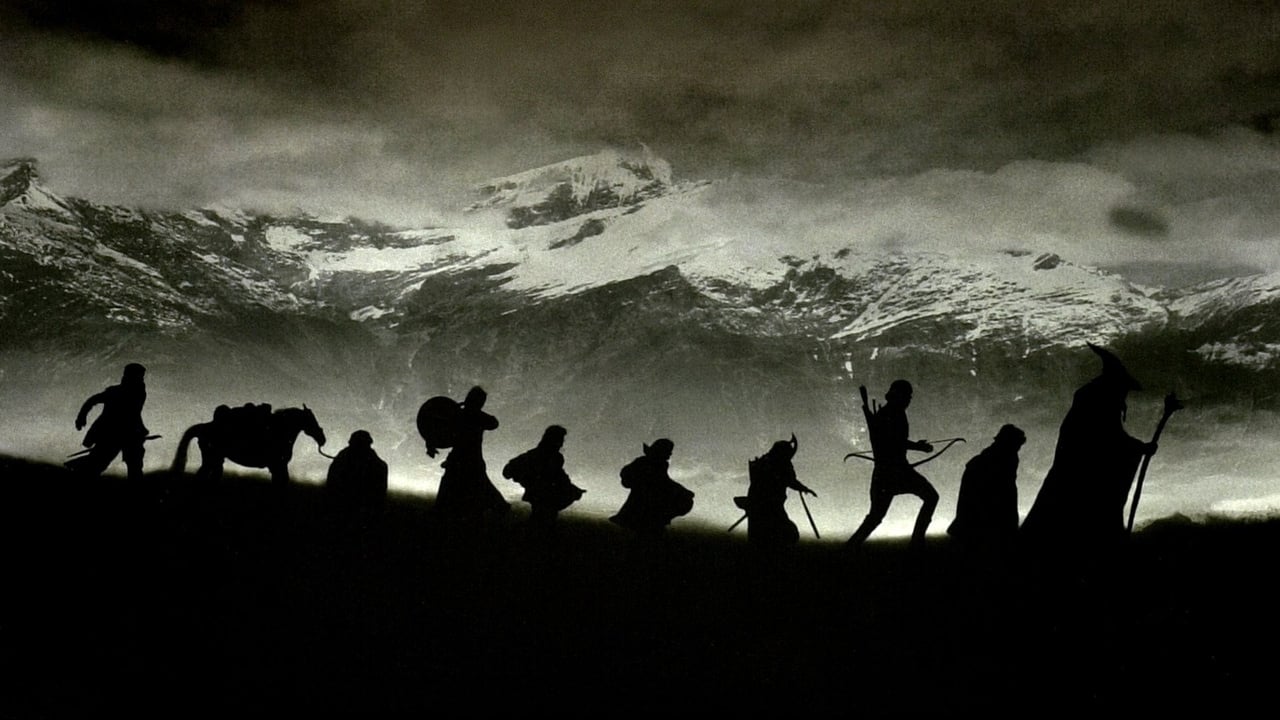
J.R.R. Tolkien wrote The Lord of the Rings as one novel. His publisher split it into three volumes, released in 1954 and 1955, which is why most people think of it as a trilogy. Peter Jackson treated it the way Tolkien did: he shot all three films back to back in New Zealand, as one production, and released them a year apart.
What makes Fellowship the best adaptation here is how intelligently it cuts. Tom Bombadil, a long and much-loved detour in the book, is gone entirely. Arwen takes over the ride to the Ford from a minor elf, Glorfindel, which gives a character who barely appears in the novel a reason to be in the story. The screenplay, by Jackson, Fran Walsh and Philippa Boyens, moves faster than the book's first third without losing its mood, and Ian McKellen's Gandalf and Elijah Wood's Frodo look like the illustrations people had been drawing in their heads for fifty years.
Fellowship cost about $93 million and TMDB has it at around $871 million worldwide. The trilogy's last film, The Return of the King, won eleven Oscars including Best Picture, tying the record. No book adaptation since has been made at that scale with that much care, and the extended editions are the closest thing cinema has to reading the whole book.
For these five, the honest answer depends on the book. Read Dune and The Hunger Games first: both books live inside their main character's head in a way the films can only hint at. Watch The Devil Wears Prada first, because the film's Miranda is the better character and the book is more fun once you can hear Streep in it. Harry Potter and The Lord of the Rings work in either order, and most people reading this have already done one of them.
Coming next: The Hunger Games: Sunrise on the Reaping, November 20, 2026.
Then: HBO's Harry Potter, December 25, 2026.
Then: Dune: Part Three, December 2026.
The same question gets a different answer on television, where an eight-season show can outrun the books it came from. That is exactly what happened at number two on our ranking of the best TV shows based on books.