A three-hour documentary about a convicted fraudster just went toe to toe with a DC movie at the box office, and it grew in its second weekend. I have been a Nathan Fielder fan since Nathan for You, so here is why this one is selling out, what critics and fans are saying, and the pushback nobody in the marketing is mentioning.
You Can See Everything opened October 16 from A24. It runs 174 minutes, it is a documentary, and it is about Elizabeth Holmes, the Theranos founder serving a federal prison sentence for fraud. On paper that is the least commercial movie of the fall. In practice, people are lining up for it.
1You Can See Everything
Thirty-four days with Elizabeth Holmes before prison, and a film crew that didn't stop there.
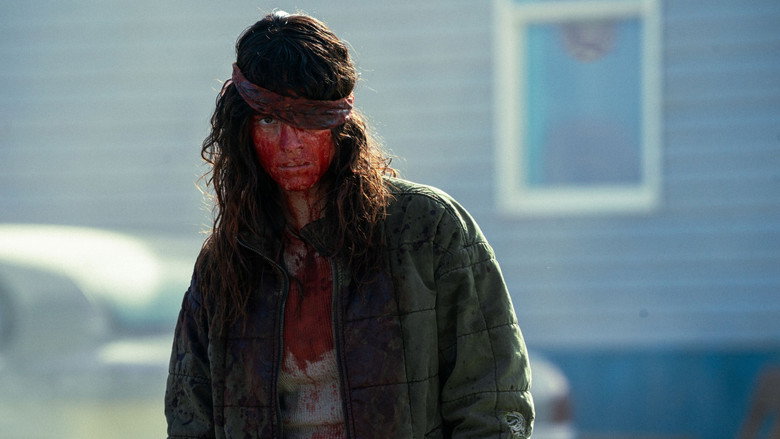
In April 2023, Holmes and her partner Billy Evans invited a film crew into a rented beach house in Del Mar, California, for the 34 days before she reported to prison. The crew was led by Nathan Fielder, making his feature directing debut, and documentary filmmaker Lance Oppenheim. In true Fielder fashion, he does not stay behind the camera. He presses Holmes on Theranos, sits her down with The Dropout, and gets more and more convinced the couple is not telling him everything. Then the film keeps going, for another two years.
If you are new to Fielder, or want the Theranos story the film assumes you already know, these four are the perfect warm-up:
Tracking had it opening around $7 to $8 million in 855 theaters. It made $15.6 million, finishing second behind Street Fighter. Its average of about $17,300 per theater was the biggest for a film in fewer than 1,000 theaters since Borat in 2006, and it was the second-biggest opening ever for a documentary that isn't a concert film, behind only Fahrenheit 9/11's $23.9 million in 2004. Reports counted more than 2,000 sold-out showings that weekend.
Then it did something movies almost never do: it went up. It was the number one movie in the country on Wednesday, October 21, and when it expanded to 2,655 theaters this weekend, early estimates put it at roughly $19.5 to $20 million, up about a quarter on its opening. That sets up a running total around $45 million. It still finished behind Clayface, which took first place with about $24 million, but a documentary sitting within a few million of a DC movie is the story of the month. If you want the other side of that matchup, here is what critics and fans said about Clayface.
What critics and audiences are saying
Reviews are close to unanimous. It holds 98% on Rotten Tomatoes from 168 reviews and a 97 on Metacritic, which is "universal acclaim" territory. Audiences agree: PostTrak surveys came back 98% positive, with 91% saying they would definitely recommend it. The Associated Press gave it four stars out of four.
It's also wildly entertaining, confounding and wholly unique.
The Associated Press
The interviewing. The AP singled out how Fielder keeps asking follow-ups and "is never afraid to just let silence sit." Anyone who has watched him on TV knows those silences are where the magic happens.
The runtime flies. Nearly every review, and plenty of fan posts, say the three hours do not drag. One early viewer put it best: "it never lags, but it certainly lingers."
It is funny. WBUR called it "a gut-busting cringe comedy" that turns into a serious question about how we decide what is real.
The dissent. Not everyone was charmed. Time's Stephanie Zacharek liked the second half but knocked its "stultifying smirkiness," and Tom's Guide, while calling it one of the year's best documentaries, found it frustrating too.
The buzz started early. It premiered as a secret screening at the Telluride Film Festival on September 6, where audiences had their phones locked in pouches before the lights went down. Every reaction that came out of that room was some version of "I can't tell you what happens." That is the best marketing a movie can get.
Why Fielder fans are losing it
Here is my fan theory for why this is working. For more than a decade, Nathan Fielder has built shows around one trick: he walks into a real situation and quietly bends it until everyone, including him, is performing. Nathan for You did it to small businesses. The Rehearsal did it to people practicing hard conversations. The Curse did it as fiction.
This time he picked a subject whose entire life story is about performance, and the reviews suggest she is better at it than he is. Inverse described Holmes as "the superior trickster" and the film as Fielder's slow-motion breakdown. As a fan, that is the most exciting sentence I have read about any movie this year. We have watched Nathan be the strangest person in every room for ten years, and someone finally out-Nathaned him.
Full breakdown: spoilers from here
The AP review says the film has a secret the filmmakers want kept as long as possible, and I am not going to give away the ending. But if you want to know how the second half works before buying a ticket, read on. If not, stop at the fan take above.
When Fielder was refused access to film some later encounters, he did what only he would do: he restaged them. Amanda Seyfried, who won an Emmy playing Holmes in The Dropout, plays Holmes in the reenactments and also appears as herself, with Christopher Abbott playing Evans. Fielder even visits Holmes in prison, and then reenacts that visit with Seyfried too. It is The Rehearsal's method pointed at a real criminal case, and it is completely bonkers.
The pushback from the Theranos side
Not everyone close to the story is a fan. Tyler Shultz, the Theranos whistleblower whose story is part of The Dropout, published an essay on October 19 arguing the film is great art but should not be treated as a documentary. His specific complaints: the machine Holmes lays out on her kitchen table was a never-finished future design, not the Edison device that was used on real patients, and the modest rental she is filmed in is a long way from the estate she lived in during her trial, which was listed at $125 million.
I think that criticism is fair, and it is worth having in your head before you watch. The film is a portrait of a person performing, made by a filmmaker who performs for a living. It is not a Theranos explainer. If you want the fraud itself laid out straight, watch The Inventor first.
So, is You Can See Everything worth seeing?
If you have ever watched a Nathan Fielder episode through your fingers, yes, and in a theater, because the room's reaction is part of it. If you are coming for a true crime breakdown of how Theranos happened, go in knowing this is a different animal, and be ready for three hours. Either way, a documentary nearly winning a box office weekend against a DC movie in 2026 is worth supporting.
#you can see everything#nathan fielder#elizabeth holmes#theranos#a24#documentary#box office#new releases
Clayface reviews: the Rotten Tomatoes score, what critics praise and pan, fan screening reactions, and whether DC's R-rated horror movie is worth a ticket.